martes, 17 de mayo de 2016

2016/05/17 - Anticipación Política, Revista de Prensa - LEAP (GEAB Special)

Paz, gobernanza mundial, integracion europea, Oriente Próximo, OPEP: la emergencia del mundo multipolar impone un cambio de método

Allá por 2006, el año en que se publicó por primera vez el GEAB, nuestro equipo situó el mundo multipolar emergente en el corazón de la crisis sistémica global. Los efectos del proceso de relativización del poder estadounidense fueron los primeros signos visibles de una enorme reconfiguración global. Empezando en 2009, con la creación del BRICS, las nuevas potencias emergentes comenzaron a situarse de manera organizada en la escena internacional, dando sentido al concepto de “mundo multipolar”. Dicho esto, la estrategia de las potencias emergentes consistió primero en reformar conjuntamente las instituciones internacionales, particularmente mediante el G20. Inicialmente, las nuevas potencias tenían el objetivo de que se las reconociera e integrara en las instituciones internacionales fundadas por Occidente en el siglo XX. De hecho, gracias a la presión política se han conseguido algunos cambios, pero desde que perdieron el control de sus mecanismos de poder, los occidentales se han visto obligados a intervenir cada vez más fuera de esos organismos que habían creado. Por ejemplo, EE.UU. se ha salido en muchas ocasiones del marco de la ONU e incluso de la OTAN al dirigir sus campañas militares. De manera similar, los occidentales se han alejado de la OMC…
(Comunicado GEAB No. 105 http://www.leap2020.net/newsletter/lt.php?id=Mh8NAQsdAgtXGlEHBwUB)
Último trimestre de 2016 - Putin abandona la Presidencia rusa

Daremos ahora una anticipación bastante arriesgada, pero que tiene el mérito de arrojar una perspectiva interesante sobre el asunto más importante de la UE desde 2014: su terriblemente deteriorada relación con Rusia, su vecino más cercano y poderoso. Además, como hemos mencionado en nuestro Manual de Anticipación Política , el ejercicio anticipatorio consiste en “pensar lo impensable” … y argumentarlo. Varias consideraciones, la primera la idea de que la intervención rusa en Siria es un factor principal de cambio, nos llevan a la siguiente hipótesis...
(Para leer más, GEAB 105
http://www.leap2020.net/newsletter/lt.php?id=Mh8CDQUdAgtXGlEHBwUB)
Oriente Próximo en 2013 - Tres visiones para una misma región

Irán, Turquía y Arabia Saudita presentaron hace unas semanas sus respectivas “Visiones de futuro” y nuestro equipo considera importante integrar, en su trabajo de anticipación, los planes de desarrollo estratégico de los principales actores de Oriente Próximo. Lo que interesa especialmente a nuestro equipo es por un lado (desde un punto de vista pesimista), anticipar el riesgo de colisión entre estos planes; por otro lado (desde un punto de vista más optimista), remarcar la naturaleza pública de estas agendas, lo que permite a los actores reunirse y dialogar...
(Para leer más, GEAB 105 http://www.leap2020.net/newsletter/lt.php?id=Mh8CDQUdAgtXGlEHBwUB)
EE.UU. 2017 - Independencia de Puerto Rico

En el marco de nuestra serie de artículos sobre EE.UU. durante este año electoral y a la luz de las profundas transformaciones sociopolíticas en curso en el país, en este número vamos a dedicarnos a estudiar lo que implica la crisis de Puerto Rico con respecto al sistema de solidaridad de la unión de EE.UU., a demostrar que se han alcanzado nuevos límites que imponen ruptura o evolución y a anticipar que la hipótesis más probable es la ruptura...
(Para leer más, GEAB 105 http://www.leap2020.net/newsletter/lt.php?id=Mh8CDQUdAgtXGlEHBwUB)
Inversiones, tendencias y recomendaciones

Mercosur, el regreso: Las negociaciones sobre el acuerdo comercial entre la UE y Mercosur no están tan avanzadas como deberían. Con miedo a una gran competencia, los agricultores europeos no quieren ponerse de acuerdo../
Fondos de pensiones, las dificultades no han terminado : Los fondos de pensiones necesitan un rendimiento mínimo de sus inversiones, para sacar beneficio del dinero de sus clientes, y poder llegar a la cantidad de pensiones prometida../
Cuidado con la fiebre de Uber, AirBnB y otros : Muchas veces, tenemos la impresión de que las nuevas empresas como Uber, AirBnB y otros servicios que ponen en contacto a particulares por una determinada comisión, tienen una mina de oro...

jueves, 12 de mayo de 2016

2016-05-12 Political Anticipation - LEAP Press review

The GEAB 105 is coming up in a few days ! Don't miss it
The next monthly confidential bulletin edited by LEAP will be released on May 15-17 (according to the language version) and we would absolutely not want you to miss it ! Here are some very interesting topics to be discussed. Russia: What surprises to expect in 2016? Puerto Rico: A more significant bankruptcy than it seems. United States: The British model as future trend. Europe: New experiments in the pensions sector. Middle East: Cross regional visions... and also our investment recommendations on Mercosur, gold, oil, the dollar. (GEAB access quick link)

Deutsche Bank Sees Ruble Dip Temporary on Oil, Sanctions Outlook
The ruble weakened for a second day, trimming a three-month rally that Deutsche Bank AG says has yet to run its course. While the currency depreciated 0.7 percent to 66.4030 per dollar by 5:40 p.m. in Moscow, Deutsche Bank strategists said the ruble is in a "prime position" to build on its 11 percent advance in 2016. The bank based its projection on a view that crude, Russia’s main export earner, will "grind higher" and for penalties imposed over the conflict in Ukraine to be lifted within "a year or so."... (Bloomberg)

Stuck with dangerous dollar dominance
The world is getting an object lesson on the problems of having one dominant global currency and even the supposed prime beneficiary, the United States, can see the downside. Alarming bouts of volatility in world financial markets over the past 12 months have been rooted in a fear of what happens when a world with its highest-ever peacetime debt pile faces even a hint of higher interest rates... (Reuters)

2016 – US dollar warning : the beautiful isolation of the « global reference currency »
Following our monetary research work under the form of a surveillance of several months, our team is worried again about the US dollar. After a calming two year time, the dollar is heckled again within today’s new multi monetary world. Surprised by the conclusions of its own analyses, presented here below exclusively to you, our team of experts wishes to warn you, the GEAB readers, about the possible danger threatening the dollar. 2016 could very well be the year when the dollar wall will fall… (Extract from the GEAB No 101)

Wars displace record 40.8 million people: report
Middle East conflicts account for more than half of the 8.6 million people displaced by fighting in 2015, according to a new report. The total number of internally displaced people has jumped to a record high. The number of internally displaced people rose to a record 40.8 million people in 2015, according to a joint report released Wednesday by the Norwegian Refugee Council (NRC) and the Geneva-based Internal Displacement Monitoring Centre (IDMC)... (Deutsche Welle)

Panama Papers: Saudi Arabia King Sponsored Netanyahu’s Campaign
Isaac Herzog, member of the Knesset and Chairman of the Israeli Labor party, revealed that Saudi king Salman bin Abdulaziz financed the election campaign of Israeli Prime Minister, Benjamin Netanyahu. “In March 2015, King Salman has deposited eighty million dollars to support Netanyahu’s campaign via a Syrian-Spanish person named Mohamed Eyad Kayali... (Middle East Observer)

UK industry in recession for third time in eight years
UK industry fell back into recession as it shrank for the second quarter in a row, according to the Office for National Statistics (ONS). It is the third time UK industry has been in recession in eight years. Although industrial production rose 0.3% from February to March, it fell 0.4% both in the first three months of 2016 and in the last three of 2015... (BBC)
Clinton suffers primary setback as Trump marches toward November
U.S. Democratic White House candidate Hillary Clinton lost the primary to Bernie Sanders in economically struggling West Virginia on Tuesday, possibly signaling trouble for her in industrial states in the November general election. The defeat slowed Clinton's march to the nomination, but she is still heavily favored to become the Democratic candidate in the Nov. 8 election to face presumptive Republican nominee Donald Trump... (Reuters)

The migrant crisis will never end. It is part of the modern world
Sometimes, one fact goes a long way towards explaining a global crisis. Behind the rubber dinghies laden with desperate people washing up on European beaches and the refugee camps spread across the deserts of Jordan - or, for that matter, the plains of Chad – lies a remarkable figure... (The Telegraph)
Puerto Rico: An opportunity and a warning
Puerto Rico is in serious financial trouble. It has been almost a year since Gov. Alejandro Garcia Padilla announced he did not expect the commonwealth would be able to pay its $72 billion debt when due. The scope of potential economic damage from the island’s financial crisis is becoming clear, and the deadline for action is short... (Washington Times)
Living in The Glass Cage: why our drive to automation needs an urgent re-think
Self-driving cars, robotics and automation may sound utopian to you. But author Nicholas Carr says we're in danger of ceding too much responsibility, including complex moral choices, to machines. Nicholas Carr: We're getting to the point when technology companies have the technical ability to begin developing robots that act autonomously in the world through advances in machine learning and machine vision... (Deutsche Welle)

Uber’s deal with U.S. drivers looks cheap
Uber is getting off cheaply in its deal with disgruntled U.S. drivers. Treated as employees rather than independent contractors, the ride-hailing service might have had to pay them as much as $730 million more, according to court papers. That makes a $100 million settlement of two class-action lawsuits look like peanuts... (Reuters)
Recession May Loom for Next U.S. President No Matter Who That Is
Talk about a poisoned chalice. No matter who is elected to the White House in November, the next president will probably face a recession. The 83-month-old expansion is already the fourth-longest in more than 150 years and starting to show some signs of aging as corporate profits peak and wage pressures build. It also remains vulnerable to a shock because growth has been so feeble, averaging just about 2 percent since the last downturn ended in June 2009... (Bloomberg)

India has trade deficit with 27 countries for last three years: Nirmala Sitharaman
India has a trade deficit with as many as 27 major countries, including China, Australia, Iraq and Iran, during the last three years. With these countries, India has trade deficit continuously during the last three years, Commerce and Industry Minister Nirmala Sitharaman said in a written reply to the Lok Sabha... (Economic Times)

miércoles, 4 de mayo de 2016

2016-05-04 Political Anticipation - LEAP Press review

2006 - 2016. After ten years of activity, the GEAB's anticipation work is more successful than ever !

Rooted in European history and networks, based on an original political anticipation method, driven by LEAP's desire for independence and relevance, brave and free, the GEAB has been offering, for more than 10 years now, the interpretation of the crisis which, amid the totally chaotic media as well as political response, has remained rational, original, consistent and regularly validated. The GEAB is unique, stronger than ever, always at your service for more analyses and forecasts of the crisis...
(Re/subscribe to the GEAB and get the Anniversary Gift, an extra 1-year free subscription for a friend  http://www.leap2020.net/newsletter/lt.php?id=Mh8FDQQdAgpXGlEHBwUB  in any of the six available languages)

Oil, a sign of the times

In the mainstream media, cheap oil is an opportunity for American consumers, of course (and never a problem for the country also presented as - wonder of wonders - the present day world's number one producer), but no one to say the same of Europe, let alone of China (which is only having a finger pointed at it as being the number one consumer/polluter, having surpassed the United States). Yet, these regions have everything to gain from an inexpensive barrel, since they are only consumers and not producers. Despite this, official concerns weigh on a country still recording at least a yearly 6% growth, and now having cheap available energy (and raw materials). Strange, isn't it? The main element is ignored, though, which is that the heart of the Western financial system, the petrodollar, is faltering. With a global consumption of 90 million barrels per day, the generated money flows were 3,300 billion dollars a year, while a barrel was situated at $100 ...
(Excerpt from the GEAB bulletin No 101 http://www.leap2020.net/newsletter/lt.php?id=Mh8CDQUdAgpXGlEHBwUB)

The Age of Cheap Oil and Natural Gas Is Just Beginning

Fracking and horizontal drilling have sent supplies through the roof and prices through the floor, and things are likely to stay that way. We believe the period of excessively high oil prices has come to an end. The international spread of two revolutions will assure much ampler oil supplies, and will deliver prices far below the highs that reigned between the end of 2010 and mid-2014...
(The Scientific American  http://www.leap2020.net/newsletter/lt.php?id=Mh8MAwodAgpXGlEHBwUB)

Euro-BRICS YLP: When highly educated youth get to know about Franck Biancheri and his political message, and transfer his principles and methods to the global level

After one whole week (25/04-29/04) of team-building and brainstorming in “La Pepinière” (in Chatenay sur Seine, south of Paris), the Euro-BRICS Young Leaders Platform was welcomed on Saturday 30th/04 by the Indian Embassy to present its findings on “bridging cooperation between European and BRICS countries”. The conference was organised by LEAP and AAFB, in the framework of Franck Biancheri networks, in collaboration with the Embassy of India and was hosted by Mr. Manish Prabhat, Deputy Ambassador, Indian Embassy in Paris...
(Franck-Biancheri.eu http://www.leap2020.net/newsletter/lt.php?id=Mh8MAwsdAgpXGlEHBwUB )

Investors Boost Gold Assets in World's Top ETF by Most Since `11

Investors are piling back into gold, and they're coming in droves. Holdings in SPDR Gold Shares, the world's largest exchange-traded fund backed by gold, surged 20.8 metric tons on Monday, the biggest one-day expansion since 2011, data compiled by Bloomberg show. About $7.1 billion in new money poured into SPDR Gold this year, the most of any ETF tracked by Bloomberg around the world, as holdings soared to the highest since 2013. Bullion prices traded above $1,300 an ounce for a second straight day, before closing lower...
(Bloomberg http://www.leap2020.net/newsletter/lt.php?id=Mh8MDAIdAgpXGlEHBwUB )

Banks now go the extra mile with the clean-up act


In November 2014, when Reserve Bank of India Governor Raghuram Rajan tweaked the expression ‘rose by any other name would smell as sweet' from Shakespeare's Romeo and Juliet and said ‘NPA by any other name smells as bad', bankers were left fuming. They wondered how the regulator could show banks in a bad light. Now, 18 months later, banks are realising the benefit of calling a spade a spade...
(Economic Times http://www.leap2020.net/newsletter/lt.php?id=Mh8MDAMdAgpXGlEHBwUB)

Since when is TTIP not a BIG deal?

From “most important leak ever” to “much ado about nothing”, the analyses from different commentators of yesterday's TTIP revelations couldn't be wider-ranging. In a blog post, Trade commissioner Cecilia Malmström tried to soft-pedal the importance of the leaks by saying that the consolidated texts, leaked by Greenpeace, only reflected “each side's negotiating position”...
(Euractiv http://www.leap2020.net/newsletter/lt.php?id=Mh8MDAAdAgpXGlEHBwUB)

Doubts rise over TTIP as France threatens to block EU-US deal

Doubts about the controversial EU-US trade pact are mounting after the French president threatened to block the deal. François Hollande said on Tuesday he would reject the Transatlantic Trade and Investment Partnership “at this stage” because France was opposed to unregulated free trade. Earlier, France's lead trade negotiator had warned that a halt in TTIP talks “is the most probable option”...
(The Guardian http://www.leap2020.net/newsletter/lt.php?id=Mh8MDAEdAgpXGlEHBwUB

Euro zone retail sales fall more than expected in March

Euro zone retail sales fell more than expected in March against February as consumers cut purchases of food, drinks and tobacco, the European Union's statistics office said on Wednesday. Retail sales, a proxy for household spending, decreased 0.5 percent in March month-on-month in the 19-country currency bloc, Eurostat said. Economists polled by Reuters had forecast a much smaller decrease of 0.1 percent...
(Reuters http://www.leap2020.net/newsletter/lt.php?id=Mh8MDAYdAgpXGlEHBwUB)

The Turkey deal is proof that Europe can hold its nose and adapt to reality - populists must follow suit

It is measure of the muddle that the European Union has got itself into over immigration policy that even when it gets its act together - as it has belatedly with its ugly-yet-pragmatic EU-Turkey migration deal - it still finds itself being pilloried from both the Left and the Right.
(The Telegraph http://www.leap2020.net/newsletter/lt.php?id=Mh8MDAcdAgpXGlEHBwUB)

Russia offers free land to all citizens willing to move to the Far East

Call it the Muscovite version of "manifest destiny." On Monday, President Vladimir Putin signed into law a bill that offers every Russian citizen a tract of land in their country's remote Far East. "All citizens will be entitled to apply for up to hectare of land in the Kamchatka, Primorye, Khabarovsk, Amur, Magadan and Sakhalin regions, the republic of Sakha, or the Jewish and Chukotka autonomous districts...
(Washington Post http://www.leap2020.net/newsletter/lt.php?id=Mh8MDAQdAgpXGlEHBwUB)

Saudi Arabia looks to bring in billions of foreign dollars by planning stock market reforms

Saudi Arabia announced a string of reforms to its stock market that could attract billions of dollars of fresh foreign money and smooth sales of state assets as the kingdom grapples with damage to its finances caused by low oil prices. When Riyadh opened its bourse to direct foreign investment last June, it took a cautious approach, imposing tight ownership limits and minimum qualifications for overseas institutions to reduce the risk of them destabilizing the market...
(The Financial Post http://www.leap2020.net/newsletter/lt.php?id=Mh8MDAUdAgpXGlEHBwUB)

Western real estate: a market of contrasts

We must mention one of the main factors of the renewed vigour of the real estate market: the liquidity injections, made by the central banks (ECB being the first). These banks, by buying state bonds, are pushing the rates of these bonds toward negative ground, bringing along with them the rate of home loans, historically low now. And, far from diminishing its "support", the ECB has strengthened it, and it is unlikely it could change its course in the near future. Low rates will therefore last for one, two, three years - hard to tell for sure, but in the short term, the trend will continue to be that of low interest rates...
(Excerpt from the GEAB 104 http://www.leap2020.net/newsletter/lt.php?id=Mh8CDQUdAgpXGlEHBwUB)

China's housing market on track for soft landing

China's housing market is on track for a soft landing as cities at different levels begin to promote balanced market development in line with their conditions.The home prices in major cities have been growing at a slower pace. According to statistics released by the China Index Academy on May 1, China's four biggest cities -- Beijing, Shanghai, Guangzhou and Shenzhen -- were no longer in the lead in rising prices...
(China.org http://www.leap2020.net/newsletter/lt.php?id=Mh8MDAodAgpXGlEHBwUB)

Brazil proscecutor calls for obstruction of justice probe into President Rousseff

Reports said Brazil's state attorney wants President Rousseff questioned for allegedly trying to stall a corruption investigation. She insisted the scandal would not affect the Olympics as she set off the torch relay. Local media reported late on Tuesday that Brazil's top prosecutor filed a request to investigate President Dilma Rousseff for possible obstruction of justice. The case would be the first time Rousseff has been directly implicated in the sprawling corruption scandal surrounding state-owned oil giant Petrobras...

domingo, 1 de mayo de 2016

2016/04/27 Political Anticipation - LEAP Press review

The great crisis of the Western nuclear sector
In France, while the EDF's CFO is slamming the door further to the total fiasco (not just the financial one) of the two EPR reactors' construction in Hinkley Point, England, the Canton and the City of Geneva file complaints against the Bugey Plant, and Angela Merkel, the German Chancellor, calls for the closure of Fessenheim; Areva (almost bankrupt) and Engie (ex-GDF Suez) announce catastrophic balance sheets with losses of tens of billions of euros; in Germany, RWE and E-ON, whose financial situations are collapsing, their shareholders are no longer receiving dividends; the Italian ENI announces losses of 8.8 billion euros; the Spanish giants are being punished for fraud, and Endesa reports a net profit fall of 67% for 2015... (Excerpt from the GEAB 103)

Chernobyl: 30 years on
The accident at the Chernobyl nuclear plant on April 26, 1986, released large amounts of radiation into the environment, in Ukraine and across Europe. Decades on, problems continue to haunt the site. It's considered to be the most severe nuclear disaster of all time: On April 26, 1986, an explosion and fire at the Chernobyl nuclear plant in Ukraine released massive amounts of radiation into the atmosphere ... (Deutsche Welle)

Saudi Arabia’s post-oil future
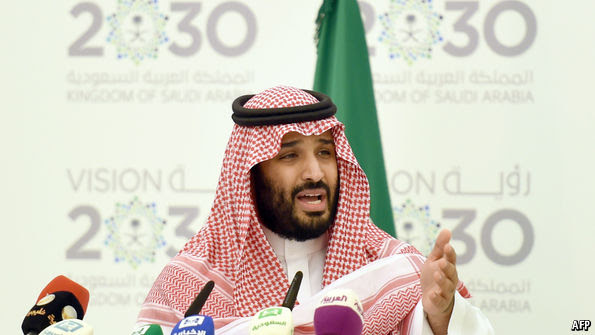
If anyone needed confirmation that Muhammad bin Salman, Saudi Arabia’s deputy crown prince, is a man in a hurry, they got it on April 25th. The 30-year-old unveiled a string of commitments for ending the kingdom’s dependence on oil by 2030 that are by themselves laudably ambitious in the puritanically conservative country. Then he trumped himself, saying that the kingdom could overcome “any dependence on oil” within a mere four years, by 2020. It sums up what seems to be a somewhat manic optimism among the youthful new policy-setters of the royal court... (The Economist)

Reliance buys Iranian oil after six-year hiatus
Reliance IndustriesBSE 0.29 % has bought crude oil from Iran after a 6-year break and is looking to strike a long-term fixed quantity deal, post lifting of sanctions. RIL, which operates the world's biggest refining complex at Jamnagar in Gujarat, is looking at quickly ramping up purchases to the earlier levels of about 5 million tonnes a year... (Economic Times)
EU referendum: OECD warning of 'Brexit tax' sparks row
Leaving the EU would be the equivalent of imposing an additional "tax" of one month's income on UK workers, a leading economic international body has said. The Organisation for Economic Co-operation and Development (OECD) said economic growth would be lower outside the EU as the UK could not negotiate a "sweeter" deal on trade and investment... (BBC News)
City of London, 2020: A small financial platform on the outskirts of the European continent
The city of London used to be an exceptional financial centre, by far the foremost in the world, a position it had owned for generations. Nevertheless, being attacked from all sides, it attempted with great effort to defend itself and demonstrated imagination and extensive accessibility but yet, eight years after the beginning of the global systemic crisis, it appears as just a shadow of what it used to be... (Excerpt from the GEAB 103)

Iran's Supreme Leader says U.S. lifted sanctions only on paper
Iran's Supreme Leader accused the United States on Wednesday of scaring businesses away from Tehran and undermining a deal to lift international sanctions. Ayatollah Ali Khamenei told hundreds of workers that a global deal, signed between Iran and world powers, had lifted financial sanctions, but U.S. obstruction was stopping Iran getting the full economic fruits of the agreement... (Reuters)
Riot breaks out at refugee camp on Greek island of Lesbos
A riot broke out at a refugee camp on the Greek island of Lesbos on Tuesday, with police firing tear gas and reports that several refugees and migrants had been injured. Black smoked billowed into the sky after refugees set fire to rubbish bins within the fenced camp near the village of Moria, a few miles from the island’s main port, Mytilini... (The Telegraph)
Tsipras calls for EU summit as bailout talks halt
Greek prime minister Alexis Tsipras is asking for a summit over last year's bailout after talks with lenders were suspended on Tuesday (26 April) and an expected meeting of eurozone finance ministers on Thursday was cancelled. Tsipras will call European Council president Donald Tusk later to request an emergency meeting of eurozone leaders... (EUObserver)
US interest rates: Merle Hazard tries to cheer up Fed watchers
Will the US Federal Reserve raise interest rates this week? Not a chance, say economists. The bigger question is when - perhaps if - the central bank will ever get borrowing costs back to more normal levels. December brought the first US rate rise in almost a decade but since then Fed policymakers, led by chair Janet Yellen, have been sitting on their hands. The Fed’s main interest rate is still very close to zero, with a range of 0.25-0.5%... (The Guardian)

Austrian Voters Deal Blow to Mainstream Parties in Election
Voters in Austria’s presidential election Sunday sent a stern warning to the established parties that have ruled the country since World War II, making a populist, anti-immigrant candidate the front-runner. Preliminary results published by the Austrian interior ministry, which didn’t include mail-in ballots, showed that Norbert Hofer... (WSJ)
Spain Political Deadlock May Spur New Elections and Market Woes
The deadlock between Spanish political parties makes fresh elections almost inevitable as it’s highly unlikely a government can be formed before the May 2 deadline, analysts say. With polls still suggesting no one party will secure a majority, a fresh vote risks spurring market volatility and wider spreads, especially as Spain will go to the polls just days after the U.K. referendum on EU membership, they add. (Bloomberg)

Serbia election: EU grasping at straws
Europe’s electoral calendar is gathering pace but not enough scrutiny has been placed on Serbia’s recent general election. Prime minister Aleksandar Vucic and his Serbian Progressive Party emerged victorious from the 24 April vote. Many analysts compared this election to a de facto referendum on EU membership. In a recent interview with Vucic , Politico described Serbia’s vote as a battle between extremist nationalist and pro-European forces... (EUObserver)

Venezuela announces two-day week as it battles energy crisis
Venezuela’s public employees will work only on Monday and Tuesday as the country grapples with an electricity crisis. President Nicolás Maduro announced on Tuesday that the government was slashing working hours for at least two weeks in an attempt to save energy. He said the water level behind the nation’s largest dam had fallen to near its minimum operating level thanks to a severe drought.... (The Guardian)

April Steel Price Forecast: Warning Signs Come From China
The recent steel rally seen in China is triggering some warning signs. Fitch Ratings recently announced prices for the metal increased, in part, due to rising speculation about an inevitable slump. According to a report from Bloomberg, the sharp increase in steel prices isn’t sustainable, as mills are expected to fall back on idled capacity, thus increasing supply... (Investing.com)

domingo, 24 de abril de 2016

2016/04/20 Political Anticipation - LEAP Press review

Brazil, Europe, Iran, US, Saudi Arabia – The return of national sovereignty: heading toward one ultimate stand?
For nearly 10 years now, the global systemic crisis has been composing an impressive symphonic « canon » in which the financial crisis, the economic crisis, the social crisis, the political crisis, the ideological crisis and the geopolitical crisis, all of them of a global dimension, play similar melodic lines sequenced one after the other. It’s the political aspect of the crisis which currently dominates the global agenda in an increasingly worrisome manner. The weakening of states as a result of these political crises, combined with geopolitical or economic shocks suffered by these states, leads to national retrenchment and hardening that does not bode well for democracy, from a domestic point of view, or for peace, from an international point of view. We’ve already seen all this in detail. However, we should analyse carefully the characteristics of this multi-directional national retrenchment... (The GEAB 104 is now available and worth reading every single page !)
Turkey and EU hail successes of migrant deal
The EU commission and Turkey have praised their controversial migrant deal for breaking the business model of the people smugglers and decreasing the number of migrants travelling to Europe. EU commission president Jean-Claude Juncker and Turkish PM Ahmet Davutoglu talked about the deal at the Council of Europe on Tuesday (19 April), a day before the EU’s executive was due to unveil its first assessment of the agreement... (EUObserver)
Brussels seeks €50 billion to digitalise Europe’s industry
The European Commission unveiled its long-awaited strategy to support the digitalisation of industry on Tuesday (19 April), aiming to mobilise around €50 billion by 2021 to help manufacturers catch up in the global race for the fourth industrial revolution... (Euractiv)
US Elections: The end of the American democracy as we knew it
Even though it was considered a global model, at least since Tocqueville and his book Democracy in America (1835), the US democracy is currently on the verge of a major turning point. This shift seems to be the result of the total lack of updating in American politics, the self-proclaimed paragon of global democracy. Yet, this time, despite the image given to it by the media, the problem is much deeper than the low level of the debates or the candidates' personalities... (Read more in the latest GEAB bulletin)

Too Many Government Secrets Make the U.S. Unsafe
“There’s classified, and then there’s classified,” President Barack Obama said in a recent interview. Unfortunately, he’s right: The U.S. government classifies vast amounts of material as secret, top secret and the like, much of it with no relevance to national security. This isn’t just a bureaucratic waste of money and a blow to the democratic ideal of government transparency... (Bloomberg)

Trump's surprising new style and other New York lessons
Both Hillary Clinton and Donald Trump claim New York as their home state, and on Tuesday New York voters treated them like family. Other states may have kicked them around - oh, that mean Wisconsin! - but when the two front-runners came back to their native land, they were enveloped in the welcoming arms of those who know and love them best... (BBC)
EU, US and China fail to agree on steel production
Major steel-producing countries failed to agree measures to tackle global overcapacity during a meeting in Brussels on Monday (18 April). China, the world’s biggest producer, and other major players agreed that the issue was urgent, but they continued to argue over whether Beijing was causing global overcapacity by subsidising domestic production... (EUObserver)
Gold is the spectre haunting our monetary system
For a century, elites have worked to eliminate monetary gold, both physically and ideologically. This began in 1914, with the UK’s entry into the First World War. The Bank of England wanted to suspend convertibility of bank notes into gold. Keynes counselled wisely that the bank should not do so. Gold was finite, but credit elastic... (The Telegraph)
Will each UK household be £4,300 worse off if the UK leaves the EU?
The Treasury has published an analysis (pdf) of the implications of Britain leaving the EU and concluded that the economy would be 6% smaller by 2030, costing each household £4,300. But how did the chancellor, George Osborne, come to this conclusion and do the numbers stack up ... (The Guardian)
Fact, Fiction and Brexit: Truth-Squadding the Arguments
The U.K.’s referendum on its membership in the European Union has prompted a whirlwind of claims about the bloc, some more accurate than others. Both sides are clashing over the effects an exit will have on trade and investment, especially after the publication of a U.K. Treasury report this week predicting a decline in British output of as much as 7.5 percent after 15 years, costing as much as 2,100 pounds ($3,000) per person... (Bloomberg)
Brexit survey: UK should stay in EU
With the UK's June 23 referendum just over two months away, a survey taken this month looked to Germany, Poland, France and Spain for opinions about a possible "Brexit" - how likely they thought it was, whether they wanted it and whether it would hurt the EU. The German-based pollsters Infratest-dimap conducted the nationwide telephone and online surveys in cooperation with institutes in each of these countries between April 4 and 14... (Deutsche Welle)

Trade surplus for EU in February of EUR 3.0 bn
The EU recorded a surplus in trade in goods with the rest of the world of EUR 3.0 bn in February, compared with +EUR 1.8 bn in February 2015, according to first estimates from Eurostat, the EU's statistical office. The first estimate for extra-EU28 exports of goods in February 2016 was €137.1 billion, down by 1% compared with February 2015 (€138.2 bn). Imports from the rest of the world stood at €134.1 bn, down by 2% compared with February 2015 (€136.4 bn)... (EUBusiness)

BRICS moves to establish bank institute, rating agency
BRICS countries on Friday discussed the efficacy of "establishing" a bank institute and a rating agency of their own following the New Development Bank (NDB) becoming fully operational. BRICS finance ministers and central bank governors met here on the sidelines of the Annual Spring meeting of the International Monetary Fund and the World Bank, for a discussion chaired by finance minister Arun Jaitley... (Times of India)
Won't be euphoric if India is fastest-growing large economy: central bank chief
India should find ways to support higher economic growth on a sustainable basis and not fritter away gains as it did in the past, central bank Governor Raghuram Rajan said on Wednesday. Prime Minister Narendra Modi's two-year old government is seeking to bolster an economy which grew 7.3 percent, among the fastest growth rates in large economies, but below the 8 percent growth needed to generate jobs for millions of Indians joining the workforce every year... (Reuters)

Saudi Prince Says Kingdom Working to Soften Subsidy Cut Blow
Saudi Arabia will limit the impact of subsidy cuts on its citizens as the world’s largest oil exporter overhauls its economy for the post-oil era, Deputy Crown Prince Mohammed bin Salman said. The government is developing a mechanism to provide cash to low- and middle-income Saudis who rely on subsidies, Prince Mohammed said in an interview on Thursday at King Salman’s private farm in Diriyah... (Bloomberg)