sábado, 5 de noviembre de 2016

2016/11/04 - Anticipación Política, Revista de Prensa - LEAP

El calendario del futuro del GEAB
La anticipación política no funciona como una bola de cristal. Los “datos del futuro” constituyen la materia prima del análisis: elecciones, cumbres, reuniones diversas y otros elementos que permiten esclarecer el futuro de hechos reales. El equipo del GEAB decidió que, a partir de junio de 2016, compartiría con sus lectores estos datos “en bruto” de la anticipación. El calendario del futuro determinó las fechas importantes de los tres meses siguientes, señaladas por el equipo de redacción, y las relacionó con observaciones sobre las perspectivas de transformación abiertas por cada una de ellas. Todo ello dio forma a un esquema de los tres meses siguientes, particularmente útil para cualquier dirigente... (GEAB No 108 / Suscripción http://www.leap2020.net/newsletter/lt.php?id=Mh8CDQUdAQlXGlEHBwUB)

Con Clinton o Trump en el retrovisor, el Parlamento británico debería decir 'no' al Brexit
Nuevo disgusto para los partidarios de la salida del Reino Unido de la UE: no podrán agarrarse como un clavo ardiendo a la mínima diferencia entre marcharse y permanecer registrada en el referéndum de junio para saltarse a la torera al Parlamento a la hora de comunicar la decisión de romper con Europa por la vía del Artículo 50 del Tratado de Lisboa. (Huffington Post
http://www.leap2020.net/newsletter/lt.php?id=Mh8FAQpQTwpTUx4DBgQBBw)

Durão, la ley lava las conductas impropias

Resumen sucinto de los hechos: un llamado comité de ética de la Comisión Europea ha dictaminado que Jose Manuel Durão Barroso, expresidente de la Comisión, respetó las normas del código de conducta de los excomisarios cuando aceptó el empleo del banco de inversión Goldman Sachs; que dejó pasar escrupulosamente el plazo de cuarentena (18 meses) antes de aceptar la oferta (lo hizo a los 20 meses); y que, como el propio Durão ha explicado, no le han contratado para hacer lobby... (El País
http://www.leap2020.net/newsletter/lt.php?id=Mh8FAQpTTwpTUx4DBgQBBw)

Air France-KLM abandona los 'números rojos' y gana 430 millones hasta septiembre
Air France-KLM registró unas ganancias de 430 millones de euros en los nueve primeros meses del año, frente a los 158 millones de pérdidas de los nueve primeros meses de 2015, según informó el grupo franco-holandés, que revisó sus cuentas consolidadas para reflejar la venta del 49,99% de Servair, su negocio de catering, a la china HNA anunciada en junio. El grupo franco-holandés, que incluye Air France, KLM, HOP... (El Economista
http://www.leap2020.net/newsletter/lt.php?id=Mh8FAQpSTwpTUx4DBgQBBw)

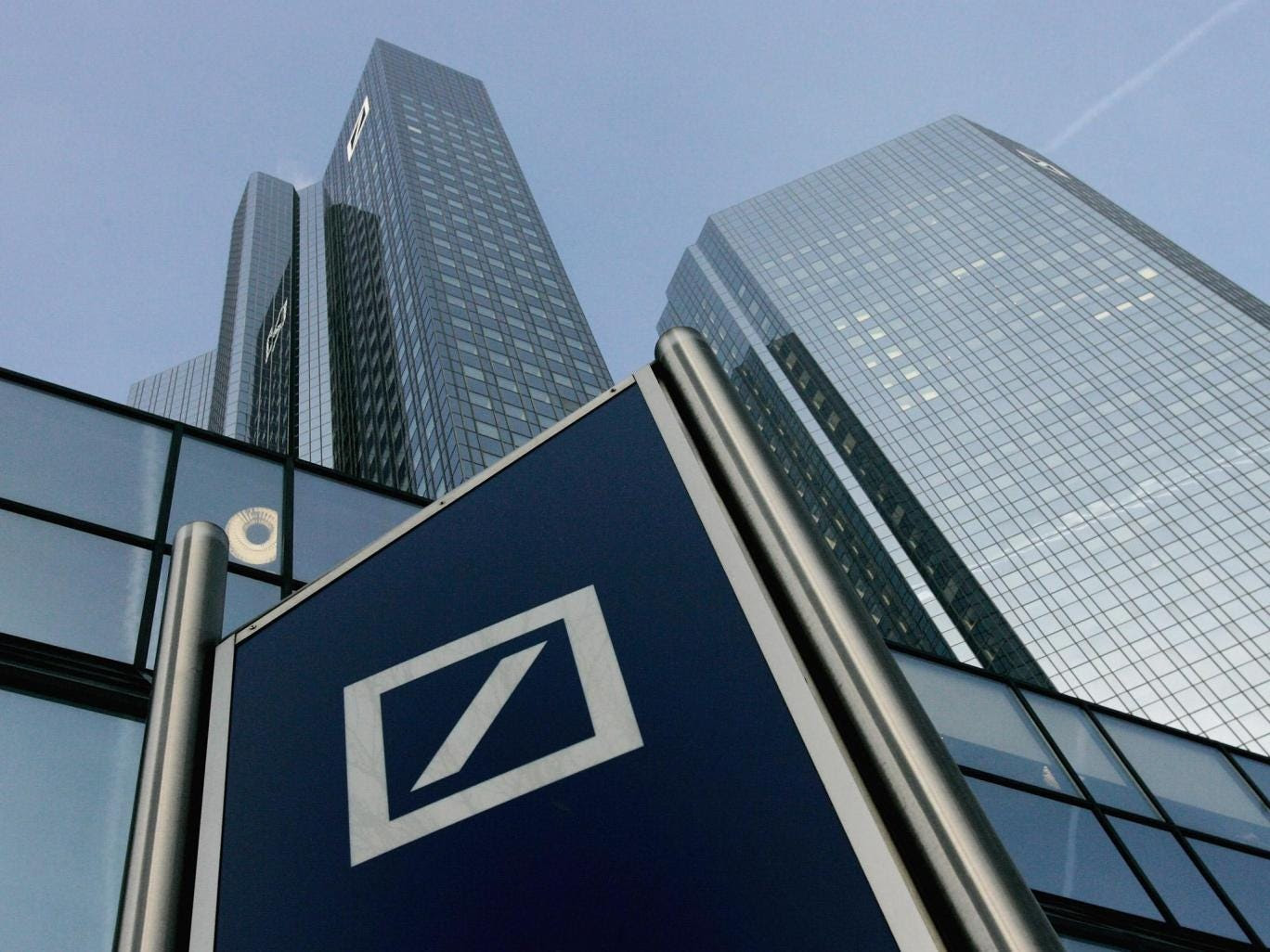
El caso del Deutsche Bank, un espantapájaros muy útil
Cuando está pasando por un momento difícil, EE.UU. siempre utiliza el mismo método para camuflar sus problemas, sacar a la luz los problemas de los demás, siendo a menudo Europa la afectada. Cuando el mundo descubre con la boca abierta la multa récord de 14.000 millones de dólares impuesta al Deutsche Bank por EE.UU., observa con horror los abusos cometidos por este banco , pero también debe observar los intereses a los que sirve esta sanción. Muchos lo han visto como una pequeña venganza tras la multa de Apple en Europa , una explicación que no se puede descartar, pero hay cosas más importantes... (GEAB No 108 / Suscripción
http://www.leap2020.net/newsletter/lt.php?id=Mh8CDQUdAQlXGlEHBwUB)

La agencia Fitch estudia bajar el rating de Deutsche Bank
La agencia Fitch ha colocado en vigilancia negativa el rating emisor a largo plazo 'A-' de Deutsche Bank, así como las calificaciones a corto plazo, viabilidad y deuda de la entidad germana, ante los retos para la generación de ingresos y capital que plantea la debilidad del entorno de negocio. "Los ratings han sido puestos en vigilancia negativa porque Fitch cree que los retos planteados por la debilidad del entorno de negocio,
particularmente en Europa y también en Asia Pacífico, dificultará a Deutsche Bank generar ingresos y, de este modo, capital durante 2017 en línea con su estrategia 2020", explicó la agencia... (El Economista
http://www.leap2020.net/newsletter/lt.php?id=Mh8FAQpVTwpTUx4DBgQBBw )

El Acuerdo del Clima de París entra en vigor en todo el mundo este viernes
El calificado como "histórico" Acuerdo de París contra el Cambio Climático, que se adoptó el pasado mes de diciembre en la capital francesa, entrará en vigor a nivel mundial este viernes, apenas una semana antes de que comience la Conferencia de las Partes de la Convención de Cambio Climático (COP22) que se celebrará en Marrakech, aunque España aún no ha ratificado sus compromisos ante la Organización de Naciones Unidas, a pesar de que sí lo firmó el 22 de abril en Nueva York...  (Heraldo
http://www.leap2020.net/newsletter/lt.php?id=Mh8FAQpUTwpTUx4DBgQBBw)

Cinco temas que seguir en la era post-Obama
9 de noviembre de 2016. El mundo respira aliviado. Las encuestas, por esta vez, no han fallado estrepitosamente: Hillary Clinton ha resultado vencedora en las elecciones presidenciales norteamericanas. Atrás queda la campaña más sucia de la que se tiene recuerdo. El 20 de enero comenzará una nueva etapa en la política estadounidense, llena, como todas, de numerosos desafíos y oportunidades... (Huffington Post
http://www.leap2020.net/newsletter/lt.php?id=Mh8FAQpXTwpTUx4DBgQBBw)

Elecciones en Estados Unidos: quién será el próximo presidente
En una elección con más de 100 millones de votos emitidos, eso fue todo lo que necesitó George W. Bush para convertirse en presidente de Estados Unidos en el año 2000. Por eso, pese a que las elecciones presidenciales de EE.UU. a menudo se describen como un ejercicio para atraer al mayor número de votantes posible, los candidatos nunca pueden ignorar a eterminados sectores del electorado... (BBC
http://www.leap2020.net/newsletter/lt.php?id=Mh8FAQpWTwpTUx4DBgQBBw)

La insoportable levedad de la fiscalidad de Europa
Tanto en su dimensión económica como en su dimensión política, la crisis sistémica de Occidente en general y de Europa en particular, tiene us raíces en una grave crisis de la fiscalidad: los estados ya no son capaces de recaudar impuestos de manera eficiente y justa. Ésta es una realidad que existe desde hace tiempo, que ha empeorado con la explosión de la crisis estadounidense y que se convertirá en un gran tema de debate durante... (GEAB No 88 / Suscripción
http://www.leap2020.net/newsletter/lt.php?id=Mh8CDQUdAQlXGlEHBwUB )
¿China o Estados Unidos?¿Cuál es la mayor economía del mundo?
La clasificación mundial cambia según cómo se mida la riqueza. España ocupa el puesto 14 entre los países con mayor PIB, según el FMI. El tamaño varía según el prisma con que se mida. La economía estadounidense es más grande que la de China si se compara en producto interior bruto en dólares corrientes (sin el efecto de la inflación).
Pero si la comparación se hace por poder de paridad de compra, China supera a EE UU... (El País
http://www.leap2020.net/newsletter/lt.php?id=Mh8FAQpZTwpTUx4DBgQBBw)

De qué se trata el demorado acuerdo firmado entre Canadá y la Unión
Europea

La Unión Europea y Canadá firmaron un acuerdo comercial, después de semanas de incertidumbre debido a la oposición en Bélgica. El acuerdo fue firmado en Bruselas el domingo por el primer ministro canadiense, Justin Trudeau, y altos funcionarios de la UE. El acto de la firma inicialmente estaba previsto para el jueves pero fue cancelada luego de que la región de Valonia, en Bélgica vetó el acuerdo... (BBC
http://www.leap2020.net/newsletter/lt.php?id=Mh8FAQpYTwpTUx4DBgQBBw )
Comienza el plazo para la tregua humanitaria en Alepo

El plazo para una tregua humanitaria de diez horas comenzó hoy a las 09.00 hora local (07.00 GMT) en la ciudad siria de Alepo (norte) sin que por el momento ninguna parte haya confirmado su inicio. Está previsto que esta ausa humanitaria de diez horas, anunciada unilateralmente esta semana por Rusia y el Ejército sirio, se extienda hasta las 19.00 horas (17.00 GMT)... (Deutsche Welle
http://www.leap2020.net/newsletter/lt.php?id=Mh8FAQtRTwpTUx4DBgQBBw )

Maduro: La oposición no volverá a gobernar "ni con votos ni con balas"
"La revolución es irreversible... Ni con votos ni con balas, ni por las buenas ni por las malas, entrará más nunca la burguesía a Miraflores". Nicolás Maduro ha vuelto a disparar su artillería más pesada contra el diálogo y contra las peticiones del Vaticano en pro de la tranquilidad del país... (El Mundo 
http://www.leap2020.net/newsletter/lt.php?id=Mh8FAQtQTwpTUx4DBgQBBw )

Podemos critica la "desigualdad" en las negociaciones del acuerdo UE-Mercosur

El eurodiputado de Podemos Xabier Benito criticó hoy que las negociaciones del tratado de libre comercio entre la Unión Europea (UE) y el Mercosur están en una "fase inicial" y que se están dando en un plano de "desigualdad" y a favor de los intereses de la UE.Así se expresó el también vicepresidente de la delegación del Parlamento Europeo (PE) para las relaciones con el Mercosur en declaraciones a Efe antes de reunirse con el círculo de Podemos en Buenos Aires... (El Mundo
http://www.leap2020.net/newsletter/lt.php?id=Mh8FAQtTTwpTUx4DBgQBBw )

Andy McDonald MP, portavoz nacional de transporte para el Partido Laborista del Reino Unido; martes 8 de noviembre a las 14.30 en Xàbia.

Estimados Compañeros

El partido laborista internacional Costa Blanca convoca una reunión el próximo martes 8 de noviembre a las 14.30 en Ancora Bar, Avinguda de París, Platja de l'Arenal. (Jávea/Xàbia)
Queremos presentar Andy McDonald MP, portavoz nacional de transporte para el Partido Laborista del Reino Unido.
El hablará del "brexit" y otros asuntos importantes para el Reino Unido.
http://www.andymcdonaldmp.org/
Queremos invitar a todos militantes del PSOE de Xabia a la reunión.
...
Un saludo

Moira John
presidenta de "Labour International Costa Blanca"

martes, 1 de noviembre de 2016

2016/10/31 - Political Anticipation - A Press Review by LEAP

The GEAB team’s Future Events Calendar
Political anticipation does not work using crystal balls. Future data represents the raw material for its analyses: elections, summits, and various meetings are elements which allow us to cast light on a future of facts. The future events’ calendar sets up important dates identified by the editorial team for the coming three months, and provides remarks on the perspectives offered by each of them. The whole piece offers a real map of the coming three months, something which is particularly useful to every decision maker... (Subscribe to the GEAB and check the calendar)

European Union looks to approve first ever military budget
The European parliament will vote on Wednesday for the first time on whether to spend large scale public cash on military research. Members of the European Parliament – the parliamentary institute of the EU - are voting on a so-called "Preparatory Action for Defense Research" which would allow 3 years of groundwork cash to be spent before a full defense budget is approved... (CNBC)

Germany wants EU fund to enforce fiscal rules
Germany has said that “neutral” bodies, such as the European Stability Mechanism (ESM), should take over from the European Commission on implementing fiscal rules. Speaking at the Tatra Summit, a conference in Bratislava, on Friday (28 October), German finance minister Wolfgang Schaeuble said that the commission was becoming too “political” to do the job right... (EUObserver)

The unbearable lightness of European taxation
As much in its economic as political dimension, the systemic crisis is rooted in a huge crisis of taxation: states are no longer able to collect taxes efficiently and fairly. It is a case of reality at work for a long time, which has become critical with the explosion of the US crisis and which will become a major theme of debate from 2015: which solutions to bring to the question of the funding of public authorities in Europe? (Read the entire report in the GEAB 88)

If the EU cannot do trade, what can it do?
In happier days for the European Union the arcana of international trade policy were a matter for harmless eccentrics, while the intricacies of Belgium’s constitutional arrangements were reserved strictly for masochists. Not in today’s Europe, where crises strike in the most unexpected places. Behold the fiasco of the Comprehensive Economic and Trade Agreement (CETA) with Canada... (The Economist)

What the EU and Canada's Long-Awaited Trade Deal Means for Brexit
The deal signed Sunday was seven years in the making. The completion of a trade deal with Canada will have no impact on negotiations between the European Union and Britain, which in June voted to leave the bloc, EU Commission President Jean-Claude Juncker said on Sunday... (Fortune)

Rising Powers and International Security: the BRICS and the Syrian Conflict, by Adriana Erthal Abdenur
Some rising powers, including the BRICS states (Brazil, Russia, India, China,and South Africa), have openly contested certain international security norms, for instance challenging the tendency to invoke humanitarian protection to carry out military intervention. However, the relevance of rising powers, and especially coalitions of such states, to specific conflicts remains poorly understood. How pertinent is the BRICS as a collective actor in international security, and what are their stances on major armed conflicts? (LEAP)

U.S. Elections: questioning the status quo
The following edited extract was transcribed from The Gateway House Podcast episode ‘U.S. Elections: assessing its wider impact‘ which is a part of the special mini-series on the U.S. elections and its foreign policy implications. Virpratap Vikram Singh: What sort of impact is this election likely to leave on American society and on the world? ... (Thegatewayhouse)

Thousands of Nato soldiers go to Baltic states, Romania
Most Nato allies have committed troops to a Russia-deterrent force in the Baltic region. Six of them have also pledged troops to a similar force in Romania. Nato head Jens Stoltenberg announced the decisions after a Nato defence ministers’ meeting in Brussels on Wednesday (26 October). Canada is to lead one of four Nato battalions to be stationed in the Baltic states and in Poland from early next year... (EUObserver)

EU MASTERPLAN: Jean-Claude Juncker unveils 10-point plot to save struggling Union
The EU Commission chief called for a “Europe that delivers” as he vowed to focus on youth unemployment, tax-dodging and green initiatives in the next calendar year. His new proposals come as the EU enters a make-or-break year, with bitter divisions growing between member states over a variety of escalating crises from migration to how to deal with Britain. (The Express)

How the world views the US elections, from Israel to North Korea
Russia has played an unexpectedly prominent role in this year’s US election, although the extent of the Kremlin’s involvement in hacking Democratic servers and the WikiLeaks disclosures will probably never be known. What is clear is that Moscow has enjoyed making trouble. Vladimir Putin has a personal dislike of Hillary Clinton going back to her time as secretary of state, while Trump fits perfectly into the mould of “chaos candidates” that Russia has supported... (The Guardian)

Britain wants tariff-free trade for motor industry after Brexit
Britain told Nissan it would aim for tariff-free trade with Europe for the motor industry after Brexit, persuading the Japanese company to invest in the country’s biggest car plant, a cabinet minister said on Sunday. Last month Nissan’s CEO Carlos Ghosn said he would need a guarantee of compensation to offset any tariffs imposed when Britain leaves the European Union, before deciding whether to build new models at the Sunderland factory in northeast England... (Economic Times)

Moldova to hold runoff election for president
Moldova’s presidential election will go to a runoff after a pro-Russia candidate narrowly missed winning a majority of votes. With almost all ballots counted early on Monday, Igor Dodon won 48.26% while pro-Europe rival Maia Sandu scored 38.42%, the top finishers among the nine candidates... (The Guardian)

GE to merge oil and gas business with Baker Hughes
General Electric Co (GE.N), banking on a recovery in oil prices, said on Monday it would merge its oil and gas business with No. 3 oilfield services provider Baker Hughes Inc (BHI.N). GE will own 62.5 percent of the new company, which will have combined revenue of $32 billion, while Baker Hughes shareholders will own 37.5 percent. Shareholders of Baker Hughes, which had a market value of about $26 billion as of Friday, will get a special one-time cash dividend of $17.50 per share after the deal closes... (Reuters)

Why I support SA’s withdrawal from the ICC
As a scholar of international relations, I support South Africa’s withdrawal from the ICC, writes Oscar van Heerden. At the current juncture, our thinking and argument about anything in South Africa takes the form of a binary code. It’s good vs. evil; Hillary vs Trump; #FeesMustFall vs police brutality. Under threat, concerned, angered and frustrated we pick our sides and hold our positions. Our opinions spew forth in a hurricane of tweets, posts and short video clips. Its black or white with no room for grey or nuance... (IOL)

viernes, 28 de octubre de 2016

2016/10/27 - Political Anticipation - A Press Review by LEAP

When members of the UN Security Council wage war at each other
It is clear that in a supposedly common struggle against a common enemy - the Islamic State - two great powers (and their "allies") now oppose each other, USA against Russia, and the irony is that each relies on the legitimacy of the United Nations principle to intervene in the battle field: a new Right to Protect rule on the one side (the US) and basic principles of non-interference on the other (Russia). With aggressive statements being issued by both sides, this confrontation summons to consider the possibility of a tragic outcome, a third world war, even nuclear. A global conflict, let’s face it, will not spare Europe, let alone Europeans... (Read the entire article in the GEAB 108)

The Deutsche Bank case: a very useful scarecrow
When in trouble, the US always uses the same method, which consists of hiding its own problems by bringing out into the open the problems of others. Europe is regularly the fall guy. So when the world, in total awe, learns about the record fine of $14 billion that the US imposed on Deutsche Bank, we could certainly look horrified at the violations committed by this bank, but we must also see the interest which this sanction serves. Many commentators saw this as a little revenge after the Apple fine in Europe, a credible explanation, but there is more to this. By creating problems for the largest European bank, the United States has managed... (Read the entire article in the GEAB 108)

DB posts surprise profit despite threat of $14bn fine
The troubled German lender Deutsche Bank has unexpectedly returned to profit in the third quarter, beating analysts’ estimates and helping to alleviate concerns over its litigation issues. Deutsche bank, led by the British banker John Cryan, reported a profit of €278 million (£248m) for the three months to the end of September. This compares to €6 billion loss in the same quarter of 2015... (The Independent)

UK GDP growth slows to 0.5% after Brexit
The pace of the UK economy has dropped in the first official verdict on how the economy has performed after the UK voted to leave the EU in June. Growth in the three months to September dropped to 0.5 per cent, down from 0.7 per cent in the April to June quarter, acording to data from the Office for National Statistics (ONS)... (The Independent)

Rising Powers and International Security: the BRICS and the Syrian Conflict, by Adriana Erthal Abdenur
Some rising powers, including the BRICS states (Brazil, Russia, India, China,and South Africa), have openly contested certain international security norms, for instance challenging the tendency to invoke humanitarian protection to carry out military intervention. However, the relevance of rising powers, and especially coalitions of such states, to specific conflicts remains poorly understood. How pertinent is the BRICS as a collective actor in international security, and what are their stances on major armed conflicts? This article focuses on the Syrian conflict, examining the BRICS coalition’s positions on the war since 2012... (LEAP)

Weber to May: UK can leave but cannot make decisions for EU
His outburst came after May angered some European leaders by telling her first EU summit that she expects Britain to be at the centre of European decision-making until Brexit takes place. Brexit was a relatively low-key issue at a summit dominated by other matters, including Russia, Syria and the migration crisis. But, in a brief speech at the end of an EU leaders’ dinner in Brussels on Thursday, May said Britain wanted to continue to play a central role in meetings and decisions until it leaves the bloc... (The Parliament Magazine)

EU drops law to limit cancer-linked chemical in food after industry complaint
The European commission has dropped plans to legally limit a pervasive but naturally occurring chemical found in food, that is linked to cancer, just days after lobbying by industry, the Guardian has learned. Campaigners say that leaked documents revealing the legislative retreat show “undue influence” by the food industry over EU law-making and a “permanent scandal”, although the issue is complex... (The Guardian)

Nuclear-Armed Foes Unite Against a UN Call to Shed Their Weapons
For all the divisions among world powers, one concern unites Russia and the U.S., India and Pakistan, North Korea and Israel at the United Nations: Keeping their nuclear weapons. Those nuclear-armed states and the three others — China, France and the U.K. — are working to head off a resolution calling for a global conference to establish a binding “legal process” to ban the manufacture, possession, stockpiling and use of the weapons. They’re bucking a popular cause backed by 50 nations, from Ireland to Brazil, which say the measure could win as many as 120 votes in the 193-member General Assembly... (Bloomberg)

EU trade deal with Canada on brink of collapse after Belgian disarray
The EU’s hopes of signing a free-trade agreement with Canada this week are on a knife-edge after Belgium announced it could not sign the treaty because of opposition from regional parliaments. The collapse of the negotiations in Belgium highlights the pitfalls that may await the British government when it seeks to negotiate a trade deal with the EU after Brexit... (The Guardian)

How to monitor the EU's new border security strategy
The European Council of 20-21 October has confirmed the EU’s undaunted resolve to outsource parts of its immigration control policy to third countries. The trend started initially with the EU-Turkey migration agreement earlier this year, and gained considerable momentum with the recent adoption of the Migration Partnership Framework. The Framework entails the negotiation of several "migration compacts" with key countries of origin and transit (initially Niger, Nigeria, Senegal, Mali and Ethiopia), backed by significant financial and technical assistance packages... (EUObserver)

The BRICS: Aren’t breaking any time soon, by Maiara Folly
In 2009, when Yekaterinburg hosted the inaugural Head of State Summit of the BRIC coalition, the world was facing its most critical financial crisis since the Great Depression of the early 1930s. Despite the turbulent international context, the grouping (which became known as the BRICS after the official inclusion of South Africa in 2011) remained relatively insulated from the initial shocks of the crisis. While the developed world struggled to recover economically, the BRICS bounced back quickly and became even more vocal in demanding reform of the established international organisations, including the Bretton Woods institutions... (LEAP)

Philippine president calls for removal of all US troops
The Philippine president, Rodrigo Duterte, has continued his anti-US rhetoric by calling for the removal of all foreign troops from the Philippines, possibly within two years. Speaking to an audience of business people at the start of a three-day visit to Japan, Duterte acknowledged that his recent remarks about Manila’s military “separation” from the US had angered Washington, but said he was determined to pursue an independent foreign policy... (The Guardian)

The Kremlin's money problems
At a summit of the BRICS nations in India on 17 October, Russian president Vladimir Putin defiantly stated that Western powers could “screw themselves” over the threat of more sanctions against his country. Earlier the US and the UK had threatened to slap additional measures on Russia over its relentless bombardment of the Syrian city of Aleppo. Putin is eager to show to the world that sanctions have little impact on his country and that the West is primarily scoring an own goal by holding on to them... (EUObserver)

Venezuela protests against Maduro escalate, dozens injured
Venezuela's increasingly militant opposition stepped up its push to oust leftist leader Nicolas Maduro on Wednesday with protests that drew hundreds of thousands but also saw unrest leading to dozens of injuries and arrests. In an incident sure to inflame the already polarized situation, a policeman died after being shot on Wednesday night in central Miranda state... (Reuters)


domingo, 23 de octubre de 2016

2016/10/21 - Anticipación Política, Revista de Prensa - LEAP (GEAB Especial)

Gran aislamiento de EE.UU.: cuando las finanzas mundiales toman su propio camino, el precipicio está cerca

Hasta ahora, el gran aislamiento voluntario de EE.UU. frente al resto del mundo, actualmente en curso, era ante todo geopolítico, como ya hemos analizado en estas páginas innumerables veces, un aislamiento que no puede más que empeorar, sea cual sea el resultado de las elecciones presidenciales (para Trump, será por ausencia de política exterior; para Clinton, por su violencia). A esta dimensión política se añade ahora un ámbito hasta ahora evitado, un ámbito que se encontraba además en el corazón del poder de EE.UU. en el mundo de antes (no es de extrañar que llegue el momento en el que ya no puede sostenerse), las finanzas...   (Leer anuncio público  http://www.leap2020.net/newsletter/lt.php?id=Mh8FAQJVTwpSXh4DBgQBBw )
El calendario del futuro del GEAB

La anticipación política no funciona como una bola de cristal. Los “datos del futuro” constituyen la materia prima del análisis: elecciones, cumbres, reuniones diversas y otros elementos que permiten esclarecer el futuro de hechos reales. El equipo del GEAB decidió que, a partir de junio de 2016, compartiría con sus lectores estos datos “en bruto” de la anticipación. El calendario del futuro determinó las fechas importantes de los tres meses siguientes, señaladas por el equipo de redacción, y las relacionó con observaciones sobre las perspectivas de transformación abiertas por cada una de ellas. Todo ello dio forma a un esquema de los tres meses siguientes, particularmente útil para cualquier dirigente... (Para leer más, GEAB 108 / Sección Perspectivas 
http://www.leap2020.net/newsletter/lt.php?id=Mh8CDQUdAQhaGlEHBwUB )

La ONU en 2017: la historia de la Sociedad de las Naciones en los años 30 se repite

¡Urgente! El último Consejo de Seguridad, bajo el mando de Rusia durante el mes de octubre , no ha logrado llegar a un acuerdo sobre una acción coordinada en Siria, poniendo de relieve un bloqueo inquietante de la Organización de las Naciones Unidas, circunscrita a su papel de observadora impotente. No obstante, la situación desastrosa en los frentes iraquí y sirio hace que mucha gente se cuestione el papel de la ONU y su capacidad para manejar conflictos internacionales, en los que los protagonistas parecen no conocer límites en la escalada de enfrentamientos, de los cuales las principales víctimas son las poblaciones civiles. Muertos, heridos, desparecidos, refugiados… Claramente la ONU no está funcionando bien... (Para leer más, GEAB 108 / Sección Perspectivas 
http://www.leap2020.net/newsletter/lt.php?id=Mh8CDQUdAQhaGlEHBwUB )

Francia en 2017: ¿Qué podemos esperar de las elecciones presidenciales? - Criterios y consejos

En resumidas cuentas, poca cosa. Ahora desarrollémoslo. Como nuestro equipo lamentaba en el número de septiembre, en el momento en el que el brexit inicia un inmenso trabajo de reorganización de Europa, con inmensas oportunidades pero también grandes peligros como en todo periodo de transición, los ciudadanos de ciertos países del centro de Europa se ven atrapados en medio de un caos de debates públicos inútiles e ineptos.
Inútiles, porque los niveles nacionales de decisión son secundarios, e ineptos, porque, en consecuencia, las propuestas de los diferentes bandos tienen un potencial de aplicación muy bajo. Marine Le Pen no hará que Frncia salga de Europa, ni que los extranjeros salgan de Francia. El resto no lograrán redirigir una economía y unos niveles de vida que dependen enteramente de los mecanismos europeos y globales de cooperación político-económica, mecanismos sobre los que no tienen nada que decir, explicar o proponer... (Para leer más, GEAB 108 / Sección Telescopio 
http://www.leap2020.net/newsletter/lt.php?id=Mh8CDQUdAQhaGlEHBwUB )
Fin del dominio estadounidense sobre la ICANN: hacia una privatización de las organizaciones que controlan Internet

La noticia ha resonado en EE.UU. y en todo el mundo. A partir del 1 de octubre, Internet “se liberará al fin del dominio estadounidense”.
¿Pero, de verdad? Es cierto que acaba de producirse un hito muy importante: EE.UU. ya no ejerce un control directo sobre la ICANN, una de las principales organizaciones al servicio de Internet, como veremos más adelante. El Gobierno de Obama (al que, por otra parte, todo esto ha pillado relativamente por sorpresa) ha accedido finalmente a la independización internacional de la ICANN. ¿Pieza fundamental en la construcción de un mundo multipolar o tecnocratización suplementaria de parte de la libertad digital? A este respecto, es interesante comparar las reacciones de los medios de comunicación a un lado y a otro del Atlántico. En EE.UU. se acusa a Obama de abandonar Internet y dejarlo en manos de dictaduras, mientras que, en Europa, prácticamente todos los medios de comunicación acogen el cambio (“La ICANN se independiza al fin de EE.UU.”, “EE.UU. cede por fin el control de Internet”, etc.) ... (Para leer más, GEAB 108 / Sección Telescopio  
http://www.leap2020.net/newsletter/lt.php?id=Mh8CDQUdAQhaGlEHBwUB )

Cuando las finanzas amenazan con abandonar Wall Street

Pero era necesario para camuflar las malas noticias que se acumulan sobre el sector financiero. Y las malas noticas vienen de los mayores compradores de bonos del tesoro estadounidense: los bancos centrales extranjeros. Los bancos centrales de China y Rusia, obviamente, pero también los de Japón, Arabia Saudita y Europa, todos están vendiendo en masa, a un ritmo histórico, los bonos del tesoro estadounidense que habían acumulado pacientemente a lo largo del tiempo. Por supuesto, todos tienen buenos motivos de índole nacional para hacerlo: esencialmente, hacer subir su moneda, que no para de bajar a causa de la debilidad de su economía...  (Para leer más, GEAB 108 / Sección Focus 
http://www.leap2020.net/newsletter/lt.php?id=Mh8CDQUdAQhaGlEHBwUB )

Inversiones, tendencias y recomendaciones

Es hora de deshacerse de las obligaciones soberanas occidentales. Teniendo en cuenta el artículo sobre los bonos del tesoro estadounidense, nuestro equipo piensa que es preferible evitar las obligaciones soberanas estadounidenses por el momento. En realidad, por otros motivos, recomendamos vender todas las obligaciones del Estado occidentales pues, al igual que los bancos centrales como el BCE, el BoE o el BoI continúan con sus expansiones cuantitativas, los rendimientos de estas obligaciones están al mínimo, lo que no solo quiere decir que no aportan gran cosa (o incluso nada en el caso de los vencimientos más cortos con tipos nulos o negativos), sino también que su valor solo puede bajar (recordemos que el valor de una obligación varía en sentido inverso a su tipo de interés)... (Para leer más, GEAB 108
http://www.leap2020.net/newsletter/lt.php?id=Mh8CDQUdAQhaGlEHBwUB )

miércoles, 19 de octubre de 2016

2016/10/18 - Political Anticipation - A Press Review by LEAP

US Isolation: When global finance turns away from the dollar system, it means the cliff is near
The United States has been voluntarily isolating itself from the rest of the world, and not just from a geopolitical point of view. This terrible isolation can only get worse, whatever the result of the presidential election: if Trump wins, it will be due to a lack of foreign policy; in the case of Clinton, her iron-fist will have a word. Another domain, namely finance, which has so far been spared, is being added to this political dimension; something which has always been at the centre of America’s power in the world. No wonder this happens at the very moment the US can no longer hold itself.
The Deutsche Bank case: a very useful scarecrow
When in trouble, the US always uses the same method, which consists of hiding its own problems by bringing out into the open the problems of others. Europe is regularly the fall guy. So when the world, in total awe, learns about the record fine of $14 billion that the United States imposed on Deutsche Bank... (Read th entire public announcement / GEAB 108)

Rejecting Trump, Wall Street Republican donors scatter largesse
Largely united in their dislike of Republican presidential candidate Donald Trump, some ultra-wealthy U.S. investors who play in conservative politics are warily weighing their choices, torn between third-party candidates, simply focusing on down-ballot contests or even voting for Democrat Hillary Clinton. As Clinton's lead over Trump has grown in opinion polls, some hedge fund managers who have traditionally donated big money to Republican presidential candidates see the congressional elections as their best hope... (Reuters)

Syrian president says Aleppo must be ‘cleaned’ as fighting continues
Russia says prepared to secure safe passage for rebels to quit Aleppo Syrian President Bashar al-Assad has spoken of the need to “clean” the besieged city of Aleppo while saying that victory in the strategic city give the Syrian army the opportunity to liberate other areas of the country from “terrorists.” Syria has been plunged into some of the worst violence of its five-year war since the collapse last month of a truce brokered by Washington and Moscow... (I24News)

Europe’s ExoMars Schiaparelli Lander on Course to Descend on Mars
A Mars lander left its mothership on Sunday after a seven-month journey from Earth and headed towards the red planet’s surface to test technologies for Europe’s planned first Mars rover, which will search for signs of past and present life. The disc-shaped 577-kilogramme (1,272 lb) Schiaparelli lander separated from the spacecraft Trace Gas Orbiter (TGO) at 1442 GMT as expected, starting a three-day descent to the surface... (Gadgets)

EU powers draft post-Brexit defence plan
The four largest EU powers after Brexit aim to create a new military structure to conduct crisis missions in Africa and to deter Russia. France, Italy, Germany, and Spain set our their plan in a letter, circulated on Monday (10 October) and seen by EUobserver, from their defence ministers to their counterparts in the other 24 EU states... (EUObserver) 

SNP’s Nicola Sturgeon announces new independence referendum bill
A consultation gets under way next week on plans for a second Scottish independence referendum, the SNP’s Nicola Sturgeon has confirmed. She told the party’s Glasgow conference that an Independence Referendum Bill would be published next week. It marks the first step to holding a second vote. Ms Sturgeon said Scotland had the right to choose a different path if it was not allowed to protect its interests “within the UK”... (BBC)

Montenegro’s Dukanovic battling to stay in power
Montenegro’s ruling social democrats (DPS) won parliamentary elections on Sunday (16 October), according to an unofficial count, but failed to gather sufficient support to continue to govern alone. The opposition also claimed to have obtained enough seats to form the next government. Political turmoil could cast a shadow on the small Balkan republic’s Nato and EU ambitions... (EUObserver)

EU needs better spending to regain citizens' trust
The new president of the EU's Court of Auditors has called on the EU to improve its accounts by delivering better value for money and more transparency, and ensure its financial rules are correctly applied. The EU faced a major challenge to regain trust, ECA President Klaus-Heiner Lehne told the European Parliament's Budgetary Control Committee Thursday."People cannot even begin to trust the EU institutions if they do not believe we are looking after their money properly and keeping a good account of how we are doing that," he said. (EU Business) 

BRICS to create credit rating agency to rival Fitch, others
The so-called Brics countries – Brazil, Russia, India, China and South Africa have agreed to fast-track the setting up of their own credit-rating agency to better cater to developing economies, revelling existing ones based in Western countries. India Prime Minister Narendra Modi said they agreed to move ahead on the ratings agency, although there was no timetable announced for its formation... (Africa News)

Tesla, Apple and Uber Push Lithium Prices Even Higher
After more than tripling in price this year, Lithium is no longer that dull commodity we take for granted in our consumer electronics: It’s the commodity powering the next, undeniable energy revolution. The tight supply picture emerging as electric cars, mega-batteries and massive energy storage solutions become the cornerstones of our lives could be on the edge of turning new lithium explorers into the next barons... (Oil Price)

Bromance Between Xi and Putin Grows as U.S. Spats Escalate
Chinese President Xi Jinping and his Russian counterpart, Vladimir Putin, will have more than vodka shots and gifts of ice cream to show for their warming relationship when they meet this weekend on the sidelines of a developing nations’ summit in India. Recent months have seen greater security cooperation between Russia and China as they find common ground against the U.S... (Bloomberg)

After Fukushima: The six essential features of the revolution in the nuclear power decision-making process for the 2010-2020 decade
For the sake of completeness, the title of this exercise in political anticipation applied to nuclear power should also include two other factors besides Fukushima, namely the Internet and the global energy crisis which is one of the elements of the global systemic crisis we are experiencing. In effect, it is the combination of these three factors which, according to LEAP/E2020, radically and permanently alters the whole decision-making process on nuclear power that we have known since this source of energy took its first steps after the Second World War. This decisional “revolution” will, during the course of the current decade, equally affect the methods to decide or, on the contrary, block the development of nuclear power, as the room for maneuver for national players in these decisions... (Excerpt from the GEAB 55)

Tepco shares slump after anti-nuclear novice wins Japan election
Shares in Tokyo Electric Power (9501.T) fell 8 percent on Monday after an anti-nuclear candidate won an upset victory in a Japanese regional election, in a blow to its attempts to restart the world’s biggest atomic power station and a challenge to the government’s energy policy. The election of Ryuichi Yoneyama, 49, a doctor-lawyer who has never held office, is a setback for Prime Minister Shinzo Abe’s energy policy, which relies on rebooting reactors that once met about 30 percent of the nation’s needs. All but two are shut down in the wake of the 2011 Fukushima nuclear disaster... (Reuters)

EU-Africa talks pose questions on aid and security
Later this week in Brussels, EU leaders will be discussing forthcoming deals with a handful of African states. With repressive regimes like Sudan demanding that the EU finance border controls, leaders appear increasingly willing to do almost anything to stop people from crossing the Mediterranean to reach Italy... (EUObserver)